The greatest soccer players: a debate for the ages
The four names at the top of every serious best-soccer-players-of-all-time list are the same: Lionel Messi, Pelé, Diego Maradona, and Cristiano Ronaldo. Nine of the ten major ranking pages in the US currently agree on this four-player group at the summit, even when they argue about the order. This list explains why that consensus holds, why Messi sits at No. 1 in most of them, and what a defensible ranking of the full Top 10 actually looks like.
Before the list: the criteria. Without them, any ranking is just opinion. The players below are ranked on a combination of peak performance (how good were they at their best?), longevity (how long did they sustain elite output?), trophies (what did they win, and against what competition?), statistical records (goals, assists, Ballon d’Ors), and their measurable impact — not just on results, but on how the game was played by everyone who came after them.
Why Era Comparison Is the Hardest Part
Comparing Pelé in the 1958 World Cup to Messi at the 2022 World Cup is genuinely difficult. The game was physically different. Pitches, boots, and travel schedules were different. Defensive structures were different. Pelé played most of his career in Brazil, where international exposure was limited and league competition was a fraction of what it became.
Maradona played in Italy’s Serie A of the 1980s — widely considered the hardest league in the world at that time — and dragged a Napoli side most analysts say had no business competing with Juventus and Inter Milan to back-to-back Scudetti. Context like that deserves weight.
This ranking attempts to apply consistent criteria across eras rather than privileging modern players simply for having access to better data. Where era context meaningfully affects a judgment, it’s stated.
The Top 10 Best Soccer Players of All Time
1. Lionel Messi — Argentina / Midfielder-Forward
Career peak: 2009–2015 at FC Barcelona, with sustained world-class output through 2023
Career highlights: 8 Ballon d’Ors (record), 4 UEFA Champions League titles (Barcelona), Copa América 2021, FIFA World Cup 2022, Copa del Rey x10, multiple La Liga titles, Inter Miami 2023–present
Goal total: 800+ career goals (club and international)
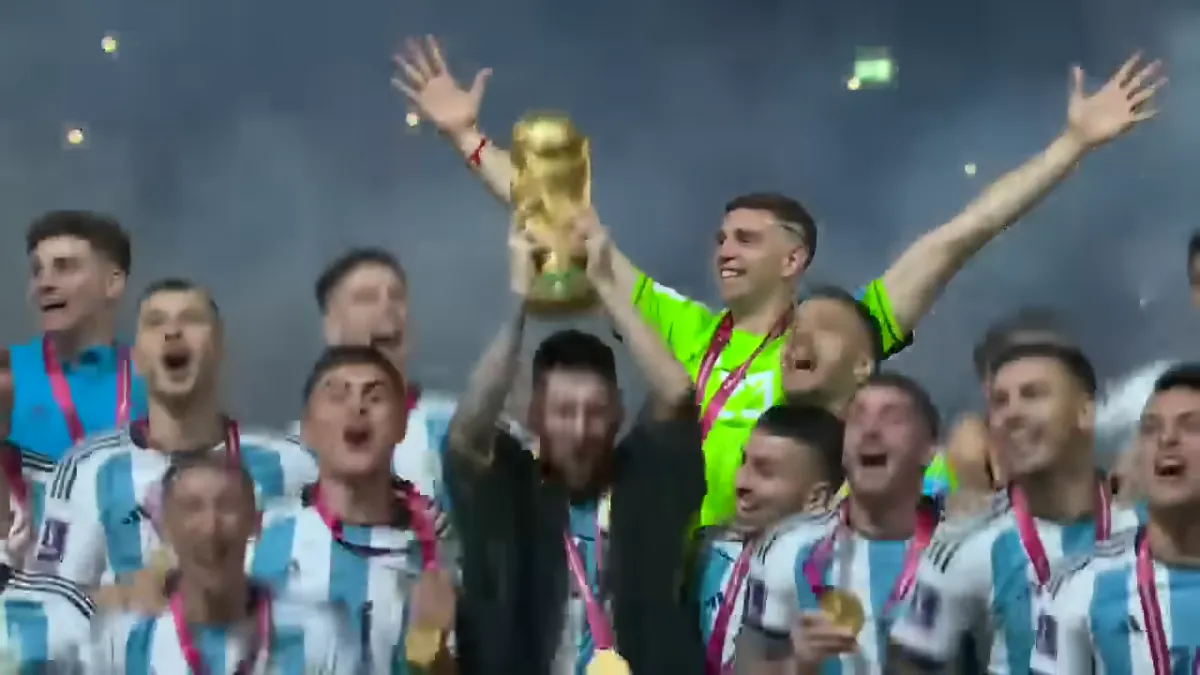
Messi is the No. 1 in eight of the ten major ranking pages found in this research, and the case is strong. He holds the all-time Ballon d’Or record (8), and he won the 2022 World Cup in Qatar — the only major trophy critics historically cited as missing from his résumé. He did this at age 35, which adds an extraordinary final chapter to a career of sustained excellence that began at age 17.
What separates Messi from every other player in history is the combination of volume and quality at peak. Between 2009 and 2015, he did things with a football that other professionals — opponents who had trained their entire lives — describe as belonging to a different category of athlete. His 2012 calendar year (91 goals in all competitions) is an output no professional footballer has matched before or since.
The debate about whether Messi or Pelé is No. 1 is genuinely close. Messi wins on accumulated evidence: more seasons at world-class level, playing against the strongest competition in the world (not one regional league), and completing the career with the World Cup in 2022.
Why people argue against No. 1: Played his entire domestic career at Barcelona (the world’s best club during much of his prime). International record against top competition was mixed until 2021.
2. Pelé — Brazil / Forward
Career peak: 1958–1970
Career highlights: 3 FIFA World Cups (1958, 1962, 1970), Santos FC, New York Cosmos; claimed 1,000 career goals (figure includes friendlies — the verified Guinness count is debated)
Goal total: 650+ official competitive goals; career total cited as higher depending on methodology
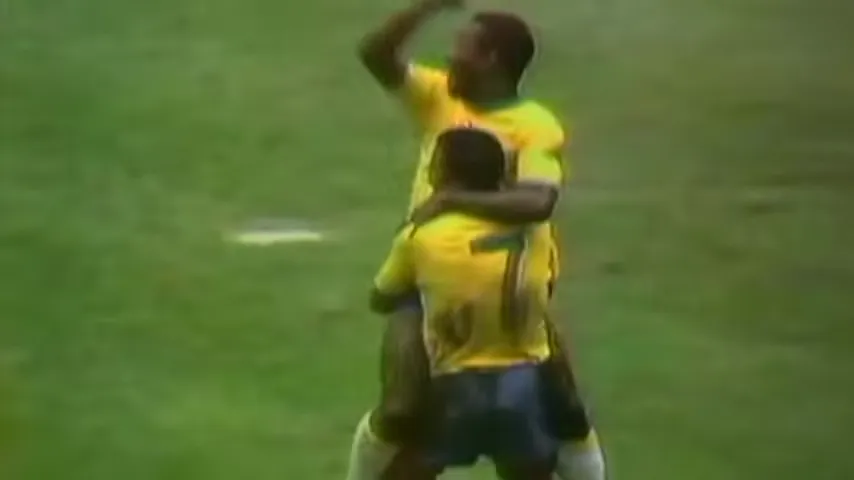
Pelé is the only player to win three World Cups. He did it across three distinct editions — 1958, when he was 17 and produced his first iconic World Cup performance; 1962 (though injured, Brazil won); and 1970, when Brazil’s team is still considered the greatest international side in history, and Pelé in the final against Italy may be the greatest World Cup performance of the modern era.
The one legitimate critique of Pelé’s record is that he played most of his career in Brazil’s domestic league — a strong league but not the European competition that measured most other players on this list. He went to New York in 1975 and dominated the NASL, but the NASL was not Serie A or La Liga. His peak was unquestionable. His legacy benefits from a kind of mythologized status that makes precise comparison hard.
Sportsfoundation.org ranks Pelé No. 1, with the argument that three World Cups is an unrepeatable feat at the sport’s highest level. That argument is serious. The reason most rankings now put Messi ahead: Messi won his World Cup in the modern era, against the strongest field in history, older than Pelé was at any of his. Pelé’s era had fewer truly elite teams in the World Cup.
Pelé passed away in December 2022. His death was global news and closed a chapter in the game’s history. His legacy as a multi-World Cup winner at genuinely world-best level is not seriously disputed.
3. Diego Maradona — Argentina / Forward
Career peak: 1982–1991, especially 1984–1990
Career highlights: FIFA World Cup 1986 (and named the tournament’s best player), two Serie A titles with Napoli, Copa del Rey with Barcelona, UEFA Cup with Napoli
Goal total: ~350 competitive goals (career)
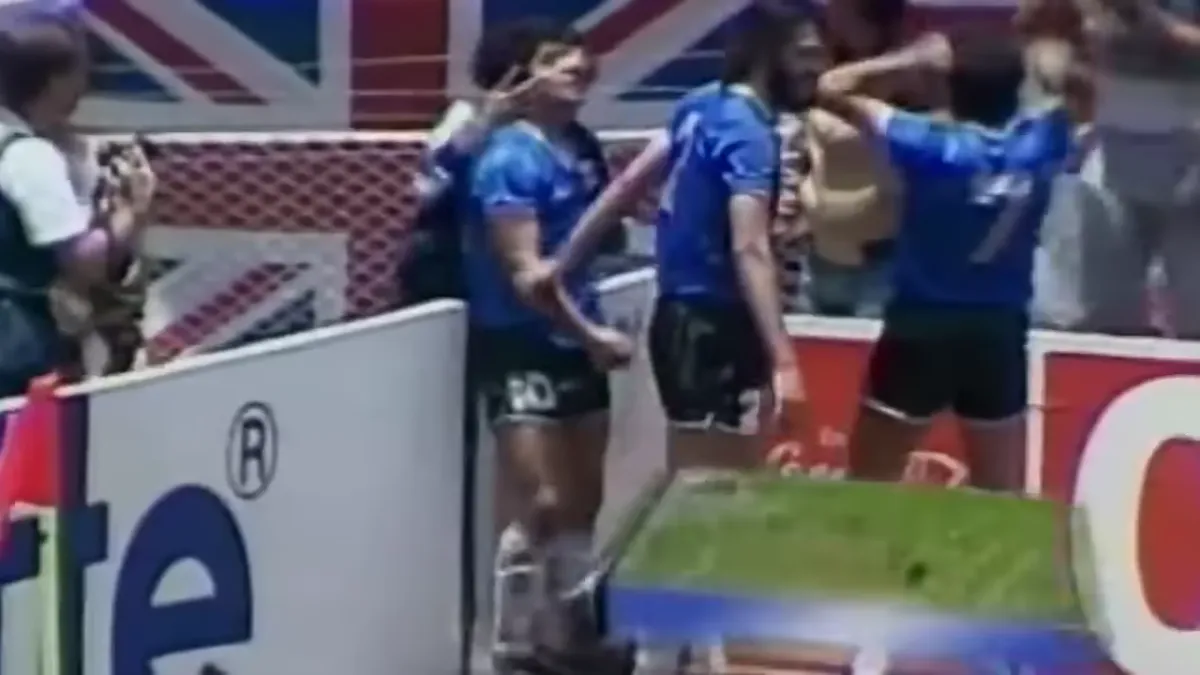
Maradona’s position at No. 3 or No. 2 in most rankings reflects something specific about his game: at his absolute peak between 1984 and 1990, no player in the sport’s history may have been better in any single-season performance burst. The 1986 World Cup is the evidence. He essentially carried Argentina — a team that, without him, would not have been a contender — to the tournament title. His performance against England in the quarterfinal (two of the most famous goals in the tournament’s history, within 4 minutes of each other) defines what a single player can do against a major opponent.
The Hand of God goal that opened the scoring was controversial and deliberate. Maradona acknowledged it decades later. The second goal — a 66-yard solo run that beat five players — was voted the Goal of the Century by FIFA in 2002.
Napoli’s back-to-back Serie A titles in 1987 and 1990 are perhaps his most instructive achievement. Napoli had never won a league title before Maradona arrived. They haven’t won it since with similar dominance. That kind of before-and-after team impact — a single player transforming a mid-table side into champions — is the rarest signature in football.
Maradona passed away in November 2020. His legacy remains powerful and contested in equal measure — genius player, chaotic personal life, deeply political significance in Argentina and Naples alike.
4. Cristiano Ronaldo — Portugal / Forward
Career peak: 2008–2019, with sustained output through the early 2020s
Career highlights: 5 UEFA Champions League titles (Manchester United x1, Real Madrid x4), 3 Premier League titles, 2 La Liga titles, 1 Serie A title, UEFA Euro 2016 (Portugal), FIFA Club World Cup x4; record men’s international goal scorer (130+ goals)
Goal total: 900+ career goals (highest ever total in professional men’s football by some accountings)
Cristiano Ronaldo is the most statistically impressive scorer in the sport’s history. His career goal total across all competitions — over 900 goals — is a record. His 130+ international goals for Portugal are a men’s international record. He won 5 Champions League titles with two different clubs. At Manchester United (2004–2009) he reinvented himself from a winger to a complete forward. At Real Madrid (2009–2018) he became the tournament’s all-time leading scorer.
The reason Ronaldo sits at No. 4 rather than No. 1 or No. 2 in the consensus of ranking pages: his achievements were on a team (Real Madrid’s Galácticos era) that would have competed at the highest level regardless of his presence, and he never won a World Cup or Copa América with Portugal. His individual excellence is not questioned. The question is whether his peak was as distinctively world-best as Messi’s 2009–2015 run or Maradona’s 1986. Most analysts say no.
The one area where Ronaldo clearly surpasses Messi: raw goal statistics and dedication to physical conditioning. He redesigned his game in his early 30s when pace diminished, and continued scoring at elite rates into his late 30s. That longevity of production is remarkable.
As of 2026: Ronaldo is still active, playing in Saudi Arabia’s Pro League. His club career at the top European level ended when he left Manchester United in 2022.
5. Johan Cruyff — Netherlands / Forward-Midfielder
Career peak: 1967–1978
Career highlights: 3 European Cups (Ajax), 1 La Liga (Barcelona), Ballon d’Or x3, 1974 World Cup runner-up (Netherlands); later a transformative manager at Barcelona
Impact metric: Invented “Total Football” as a playing philosophy; Pep Guardiola credits Cruyff as the origin of his approach
Johan Cruyff may be the player who most changed how football is played. The Dutch concept of Total Football — fluid positional interchange, pressing high, building from the back — originated at Ajax under Rinus Michels, with Cruyff as its embodiment. His 1974 Netherlands side lost the World Cup final to Germany, but the football they played is still discussed as a philosophical turning point for the sport.
At Barcelona (1973–1978), Cruyff helped break Real Madrid’s dominance in Spain and won La Liga. He returned as manager in 1988 and built the “Dream Team” that won four La Liga titles and a European Cup — the first in Barcelona’s history. His influence on the Barça style that later produced Messi’s greatest years is direct: Guardiola was his player, imbibed his philosophy, and deployed it at the highest level.
The “Cruyff Turn” — a specific feint he invented — has been taught at every youth level worldwide since the 1970s. No other player’s individual technique has been formally named and systematically taught for 50 years.
6. Ronaldo Nazário (R9) — Brazil / Forward

Career peak: 1995–2002
Career highlights: FIFA World Cup 1994 (squad, didn’t play in final), 1998 (final, controversial), 2002 (winner, Golden Boot, scored twice in final), Ballon d’Or x3, Champions League with Barcelona; 2 La Liga seasons before injuries
Impact quote: Multiple professionals in his era describe him as “Messi and Cristiano Ronaldo combined into one person”
Ronaldo Nazário — “O Fenômeno” — is the argument against the modern assumption that longevity is everything. He was, at his absolute peak from 1996 to 2002, possibly the most physically gifted footballer ever to play the game. Former professional players who faced him describe something qualitatively different from any other forward: the combination of elite pace (top-level sprint speed), explosive strength, close ball control, clinical finishing, and complete tactical intelligence in one body.
What cost him positions in most rankings: three and a half years lost to a catastrophic knee injury at Barcelona and Inter Milan. He returned. He won the 2002 World Cup. He scored eight goals in the tournament, including two in the final, and won the Golden Boot. That comeback — across injuries that would have ended most careers — is one of sport’s genuine redemption arcs.
The YouTube tribute video (Ballersite, 5.9 million views) compiled professional players across generations describing R9. The recurring phrase: impossible to replicate. Roberto Carlos: “He was from a different species.” Van Nistelrooy: “I’ve never been able to defend against anyone like him.” And the definitive summary from one interviewee: “R9 was Messi and Cristiano together.”
The injuries are the only reason he sits at 6 rather than 3.
7. Zinedine Zidane — France / Midfielder
Career peak: 1997–2006
Career highlights: FIFA World Cup 1998 (France, scored twice in final), UEFA Euro 2000 (France), Champions League x2 (Juventus, Real Madrid), Ballon d’Or x3, La Liga title (Real Madrid)
Defining moment: Champions League final, 2002 — a left-foot volley against Bayer Leverkusen widely regarded as the best individual goal in a Champions League final
Zidane was the most elegant footballer of his era. In an era of athletic forwards and pressing midfielders, he moved through games at his own pace and made space that didn’t appear to exist. His record in major tournament finals — scored twice in the 1998 World Cup final, scored in the Euro 2000 final, scored that volley in the 2002 Champions League final — puts him ahead of virtually everyone in terms of big-game delivery.
The 2006 World Cup final headbutt of Marco Materazzi (which earned a red card and denied France a possible extra-time winner) is one of the most discussed individual moments in football history. He never adequately explained what Materazzi said to provoke it. He retired immediately after.
His managerial career at Real Madrid (2016–2018, 2021–2022) produced three consecutive Champions Leagues — a feat nobody had achieved before — which adds a second chapter to an already exceptional legacy.
8. Franz Beckenbauer — Germany / Defender
Career peak: 1964–1980
Career highlights: FIFA World Cup 1974 (Germany, as captain), 3 European Cups (Bayern Munich), Bundesliga titles, won the World Cup as a manager in 1990 (the only person to win as both captain and manager)
Position note: Beckenbauer reinvented the sweeper/libero position — a defender who steps into midfield and initiates attacks
Franz Beckenbauer is the most influential defender in the sport’s history and the only player on this list to win a World Cup as both captain (1974) and manager (1990). He created the modern concept of the ball-playing sweeper — a center-back who acts as an extra midfielder in possession. Every modern center-back who passes out from the back, who steps into space to carry the ball forward, is playing a role Beckenbauer invented.
His Bayern Munich side was the dominant club in Europe in the early 1970s. His national team, West Germany, won the World Cup in 1974 on home soil.
He deserves his position in any defensible Top 10 partly as a corrective to the attacking bias that plagues most rankings: it is not a coincidence that Beckenbauer is the only outfield defender who appears consistently. The game requires defenders, and Beckenbauer was as good at defending as he was at building — which in a different era would place him firmly in the Top 5 of any objective ranking.
Beckenbauer passed away in January 2024.
9. Alfredo Di Stéfano — Argentina/Spain / Forward
Career peak: 1945–1964 (European career 1953–1964)
Career highlights: 5 European Cups (Real Madrid — consecutive, 1956–1960), 8 La Liga titles with Real Madrid, Ballon d’Or x2
Context note: Di Stéfano never played in a World Cup due to Argentina’s non-participation and Spain’s early exits; this is the primary reason he rarely reaches No. 1 in rankings despite what his contemporaries describe
Alfredo Di Stéfano is the player who built Real Madrid’s first dynasty. His five consecutive European Cups (1956–1960) with Real Madrid represent a record that stands 70 years later — no club has won the European Cup/Champions League five times in a row since. In those five finals, Di Stéfano scored in every one.
He played as a center-forward but ranged across the entire pitch in a way that was decades ahead of his time. Coaches of that era described him as three players in one body: a goalscorer, a midfielder, and a defensive presence all in the same shirt. Pelé is widely reported to have called Di Stéfano the greatest player he ever saw.
The World Cup absence is a real asterisk. He never got to compete at the tournament where individual greatness is most visibly measured. That gap keeps him at No. 9 rather than higher.
10. Ferenc Puskás — Hungary/Spain / Forward
Career peak: 1943–1966
Career highlights: 5 European Cups (Real Madrid), Olympic gold medal 1952 (Hungary), multiple Hungarian league titles; 85 goals in 84 international appearances (Hungary), plus 84 goals in 84 international appearances (Spain — played for two national teams)
Awards: The FIFA Puskás Award (best goal of the year) is named in his honor
Ferenc Puskás is the furthest back in history of any player on this list, which makes precise comparison the most difficult. But the statistical record is remarkable: 85 goals in 84 Hungarian international appearances is an international goal ratio that only Cristiano Ronaldo’s modern records approach. In his era — the 1950s — Hungary’s national team was universally considered the best in the world. They were unbeaten for 4 years and 31 games before the 1954 World Cup final, where they lost controversially to West Germany.
At Real Madrid (1958–1966), playing alongside Di Stéfano, he won 5 European Cups and scored with the left foot that coaches of the era said should not technically be possible to be that accurate with.
The 1960 European Cup final against Eintracht Frankfurt, which Real Madrid won 7–3, included Puskás scoring four goals and Di Stéfano scoring three. It is widely considered the greatest club football match ever played.
Honorable Mentions: The Players Just Outside the Top 10
Ronaldinho (Brazil): The 2005 and 2006 Ballon d’Or winner; at his peak (2004–2006 at Barcelona), the most electrifying footballer alive. Injuries and a short peak window are why he ranks 10th or 11th rather than higher.
Michel Platini (France): Three consecutive Ballon d’Ors (1983–1985). Consistently undervalued in English-speaking rankings; his Serie A record at Juventus was extraordinary. Now overshadowed by FIFA ban.
Paolo Maldini (Italy): The greatest defender in football history who wasn’t a ball-playing sweeper. Five Champions League titles with AC Milan, 25 years at the top level. The single strongest case for a pure defender on this list. thegoatequation.com ranks him No. 7.
Marco van Basten (Netherlands): Three Ballon d’Ors in the late 1980s; career ended by ankle injury at 28. His peak is considered by many analysts to be the equal of any other player here. Career cut short = outside the Top 10 by most criteria.
Garrincha (Brazil): Mané Garrincha was arguably Brazil’s better player at the 1958 World Cup (while Pelé was 17). Won 1958 and 1962 World Cups. Extremely short career peak, personal problems. A name missing from too many lists.
Lev Yashin (USSR): The only goalkeeper ever to win a Ballon d’Or (1963). The case for the best goalkeeper of all time.
George Best (Northern Ireland): A player most of his peers rate as more naturally gifted than anyone else on this list, but who produced only 5–6 elite seasons before personal problems shortened his career.
The GOAT Debate: Messi vs. Pelé vs. Maradona vs. Ronaldo
Every serious conversation about the best soccer player of all time comes down to four names, and there are four distinct philosophical positions:
Pelé argument: Three World Cups is unrepeatable. Nobody else has done it. That feat alone puts him at the top because the World Cup is football’s highest stage, and he owns it.
Messi argument: He played against the strongest competition in history, at the most demanding club in the world, for 20 years, and never stopped being world-best. His 2022 World Cup win closes the one door critics had left open. 8 Ballon d’Ors is the record.
Maradona argument: Peak matters more than longevity. At his 1986 World Cup peak, Maradona was doing things nobody else has replicated with a ball — and he did it on a team that wouldn’t have competed without him. That individual carrying of a weaker team is the truest GOAT signature.
Ronaldo argument: Statistics don’t lie. 900+ goals, 5 Champions League titles with two clubs, 130+ international goals. The numbers are not close to anyone else.
The reason Messi currently holds the consensus No. 1: he’s the only player whose case survives all four philosophical tests. He has 8 Ballon d’Ors, 4 Champions Leagues, a World Cup, and a career peak that multiple professionals describe as simply the best they’ve ever seen. He also has the World Cup — the one thing that for decades allowed people to place Pelé and Maradona above him.
Best Soccer Players by Position
Best goalkeeper of all time: Lev Yashin (USSR/Soviet Union). The only goalkeeper to win the Ballon d’Or. Known as the “Black Spider” for his range and shot-stopping. Deserves a prominent mention in every “best of all time” list. Honorable mention: Gianluigi Buffon (Italy), Manuel Neuer (Germany), Peter Schmeichel (Denmark).
Best defender of all time: Paolo Maldini (Italy) or Franz Beckenbauer (Germany). Maldini for pure defending — 25 years at elite level, 5 Champions Leagues, absolute positional intelligence. Beckenbauer for influence — he reinvented the position and won a World Cup as both player and manager.
Best midfielder of all time: Zinedine Zidane — his combination of technical quality and big-game impact is the standard. Honorable mention: Xavi Hernández, Andrés Iniesta, Michel Platini.
Best forward/striker of all time: Ronaldo Nazário (R9) when fully fit — multiple contemporaries describe him as unrepeatable. Gerd Müller for efficiency (68 goals in 62 international games).
Best female soccer player of all time: Marta (Brazil) is the consensus answer — six-time FIFA World Player of the Year, the all-time leading scorer in Women’s World Cup history. Mia Hamm (USA) is the historical counterpart: two World Cups, Olympic gold, the player who made women’s soccer mainstream in the United States. Alexia Putellas (Spain), two-time Ballon d’Or winner (2021, 2022), represents the current generation.
Where the 2026 World Cup Fits
Several ranking pages note the 2026 World Cup as a context update. The July 2026 final result (reported by sportblog-online.de’s post-tournament update) affected discussions of Kylian Mbappé and Lamine Yamal’s emerging GOAT trajectories. Neither Messi nor Ronaldo competed in 2026 — Messi announced his international retirement on August 31, 2026, per sportsfoundation.org — meaning the 2022 World Cup stands as Messi’s farewell international tournament and the final piece of evidence in the GOAT debate.
Kylian Mbappé (born 1998) is the most obvious future candidate for this list. Two World Cup appearances, a winners’ medal from 2018, top scorer at multiple tournaments. If he sustains elite output through his early-to-mid 30s and adds trophies, he enters the conversation. At 28 as of 2026, he is still building the case.
Lamine Yamal (born 2007) is the most discussed youth prospect in world football as of 2026. Still at the beginning of his career. Genuinely too early for a GOAT ranking.
FAQ — Best Soccer Players of All Time
Who is the best soccer player of all time?
Lionel Messi is the consensus choice on most current ranking pages (eight of the ten major lists in the US). The primary argument: 8 Ballon d’Ors (a record), 4 Champions League titles, and the 2022 World Cup — the last piece of evidence that critics said was missing from his case. Pelé is the main counter-argument, based on three World Cup titles.
Who is in the Top 4 greatest soccer players ever?
Every major ranking agrees on the same four players, in varying order: Lionel Messi, Pelé, Diego Maradona, and Cristiano Ronaldo. The debate is about their sequence, not their membership in the group.
Who has won the most Ballon d’Or awards?
Lionel Messi holds the all-time men’s record with 8 Ballon d’Or awards (most recently in 2023). Cristiano Ronaldo has won 5. The women’s record is held by Marta (Brazil) with 6 FIFA World Player of the Year awards; among Ballon d’Or categories for women, Alexia Putellas (Spain) has won it twice (2021, 2022).
Who is the best female soccer player of all time?
Marta (Brazil) is the most cited answer — six-time FIFA World Player of the Year and the Women’s World Cup all-time leading scorer. Mia Hamm (USA) holds the historical American argument: two World Cups, Olympic gold, and the player who built the sport’s US following in the 1990s.
Who has scored the most international goals?
In men’s football, Cristiano Ronaldo holds the record with 130+ international goals for Portugal. In women’s football, Christine Sinclair (Canada) holds the all-time international record with 190+ goals, surpassing Mia Hamm in 2020.
Is Messi better than Ronaldo?
By the consensus of ranking pages, Messi is ranked higher — he appears at No. 1 more consistently than Ronaldo does, and Ronaldo ranks between No. 3 and No. 4 in most systems. The best case for Ronaldo over Messi: raw goal totals and the breadth of competitions he dominated (Premier League, La Liga, Serie A, Champions League with two clubs). The best case for Messi: sustained peak quality, Ballon d’Or record, and the 2022 World Cup.
What makes Diego Maradona so highly ranked?
Maradona’s ranking reflects two things: his 1986 World Cup performance (widely considered the greatest individual tournament of any footballer in the modern era) and his transformation of Napoli into Serie A champions. He essentially carried Argentina to the 1986 title as the one elite player on a team of good-but-not-great teammates. That kind of individual impact in a team sport is the most rare achievement in the rankings.
Who is the best goalkeeper of all time in soccer?
Lev Yashin (Soviet Union/Russia) is the most cited answer — the only goalkeeper to win the Ballon d’Or (1963) and widely considered the benchmark for the position. Gianluigi Buffon, Manuel Neuer, Peter Schmeichel, and Iker Casillas are among the modern-era goalkeepers who receive serious consideration.
Why is Johan Cruyff ranked so highly if he never won a World Cup?
Cruyff’s ranking reflects his influence on the game rather than trophies alone. His 1974 Netherlands team lost the World Cup final but played a style (Total Football) that changed how the sport was coached for the next 50 years. His later work as Barcelona’s manager directly created the playing philosophy Pep Guardiola used to win Champions Leagues — an indirect but traceable chain of influence that no other player on this list produced as clearly.
How do Ronaldo Nazário’s injuries affect his ranking?
R9’s knee injuries cost him what multiple analysts describe as his best years (1999–2002, when he was recovering between injury spells). He returned to win the 2002 World Cup and score eight goals in the tournament, which is one of the great sports comeback stories. Without those injuries, he would rank higher — possibly third or fourth. With them, he sits at sixth, which understates how good he was when healthy.
Will Kylian Mbappé make this list one day?
He’s the most likely next entrant. At 28 (in 2026), he has a World Cup winners’ medal (2018), multiple tournament golden boots, and sustained elite production. For a GOAT-level position, he would need to win the Champions League, possibly another World Cup, and sustain his output through his early 30s the way Messi did. It’s a realistic scenario.
Who is the best soccer player in the world right now (2026)?
The active-player debate in 2026 centers on Mbappé, Erling Haaland, and Lamine Yamal. Messi is still technically active (Inter Miami) but no longer considered a contender for the best-active distinction at 39. Messi retired from international football in August 2026.